Adaptive Phase II/III Trial — Anti-Fibrotic Agent in NASH, Riyadh
Full statistical support for a seamless Bayesian adaptive Phase II/III trial across 3 Riyadh hepatology centers (max n = 240). Delivered adaptive design simulations, blinded SSR, CDISC ADaM datasets, DSMB charter, and a regulatory-grade final report.
Project highlights
Quick summary
When you need an adaptive design with sample size re-estimation at interim analysis without inflating the type I error, with outputs suitable for regulatory submission.
We designed an adaptive trial and validated its decision rules by simulation.
- Adaptive-design report with simulated operating characteristics and justified decision rules.
- Validated CDISC SDTM/ADaM datasets plus a submission-ready TLF package.
Methods & Tools
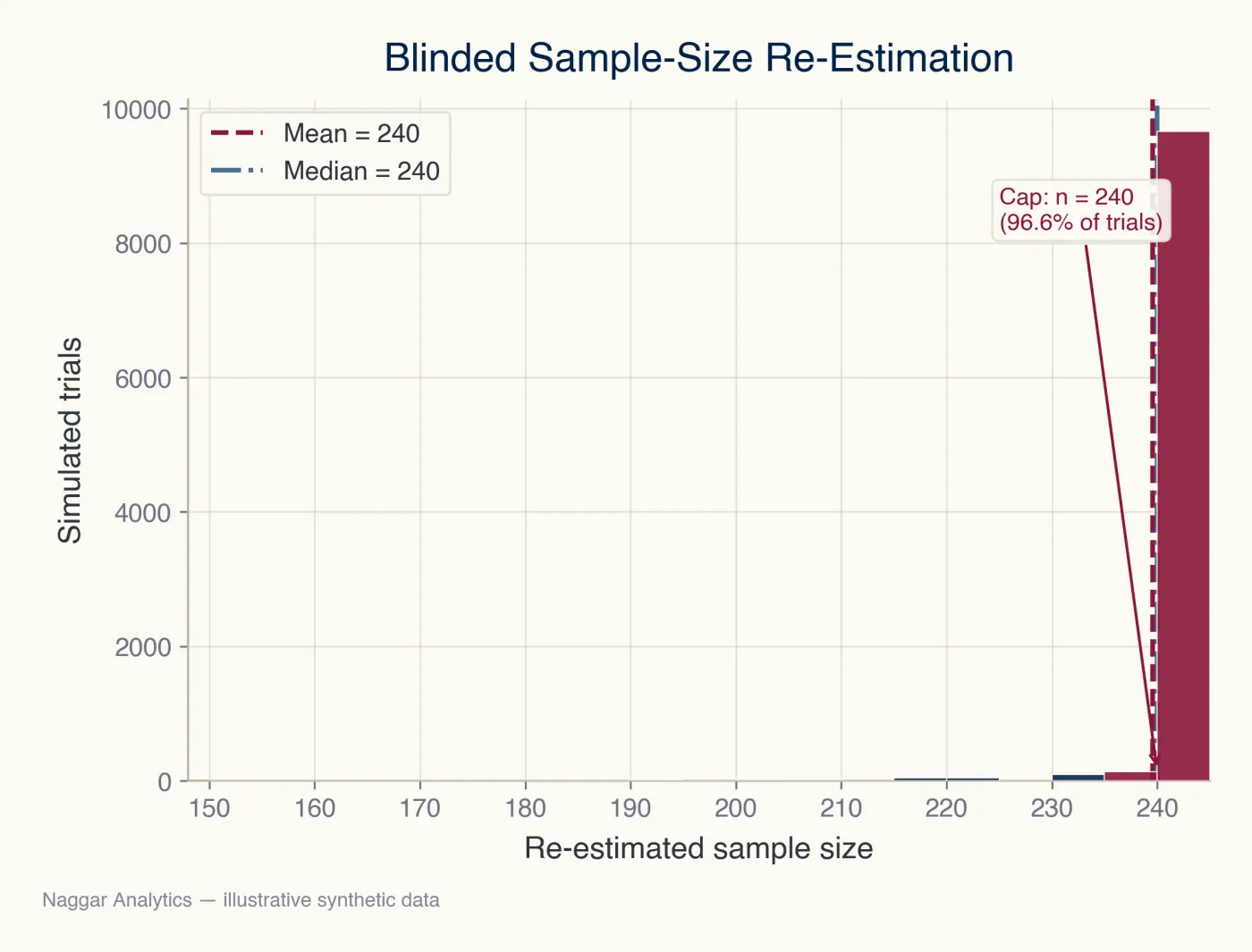
A Phase II/III NAFLD program needed an adaptive design that could re-estimate its sample size at interim without inflating the type-I error or compromising regulatory acceptability. The sponsor required pre-specified Bayesian decision rules, controlled operating characteristics, and CDISC-conformant deliverables suitable for submission.
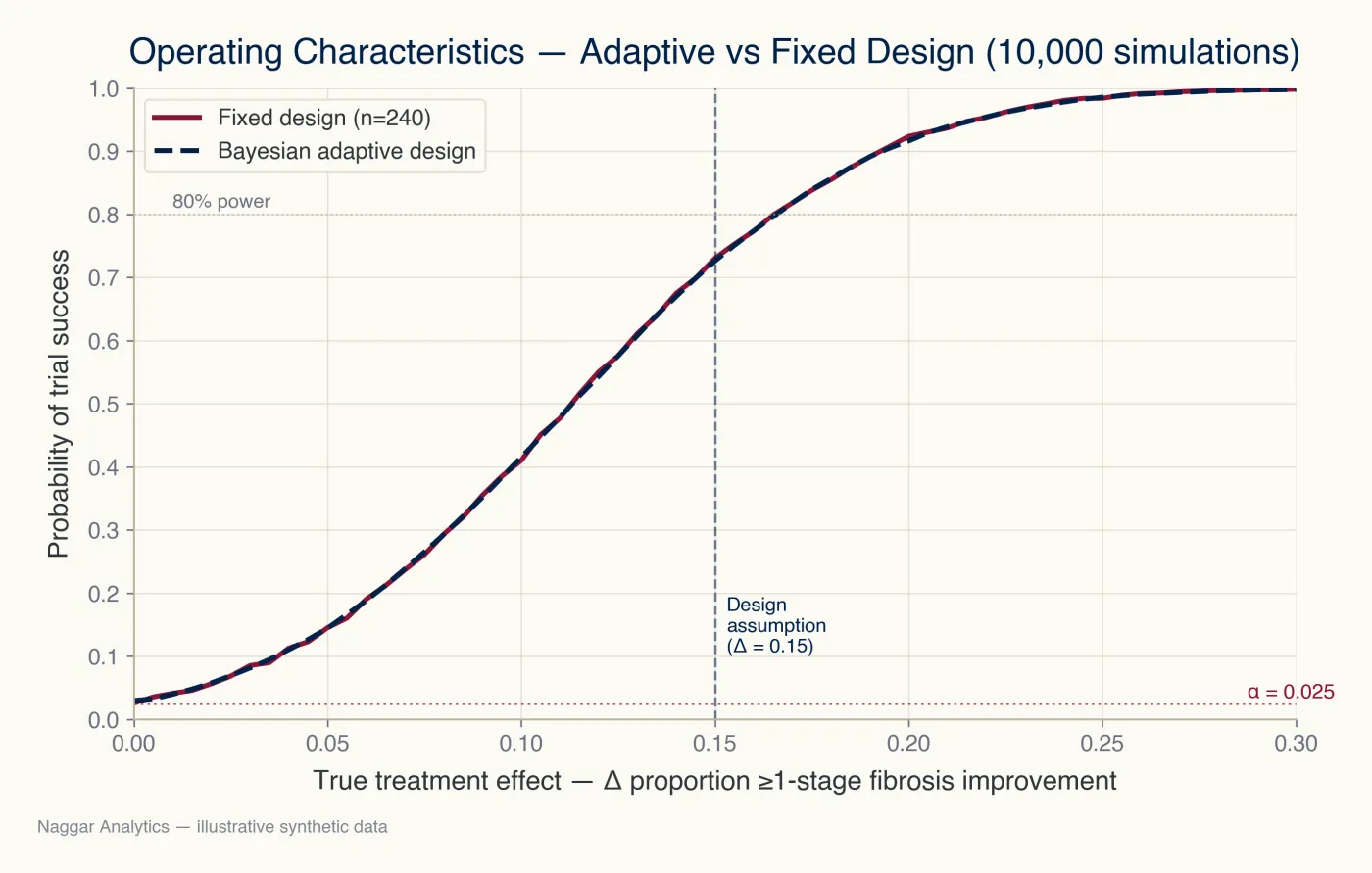
Specified the estimand framework and adaptive decision rules under ICH E9(R1), and quantified the operating characteristics (power, type-I error, expected sample size) through 10,000-replication simulations in Cytel EAST 6 and R (rpact).
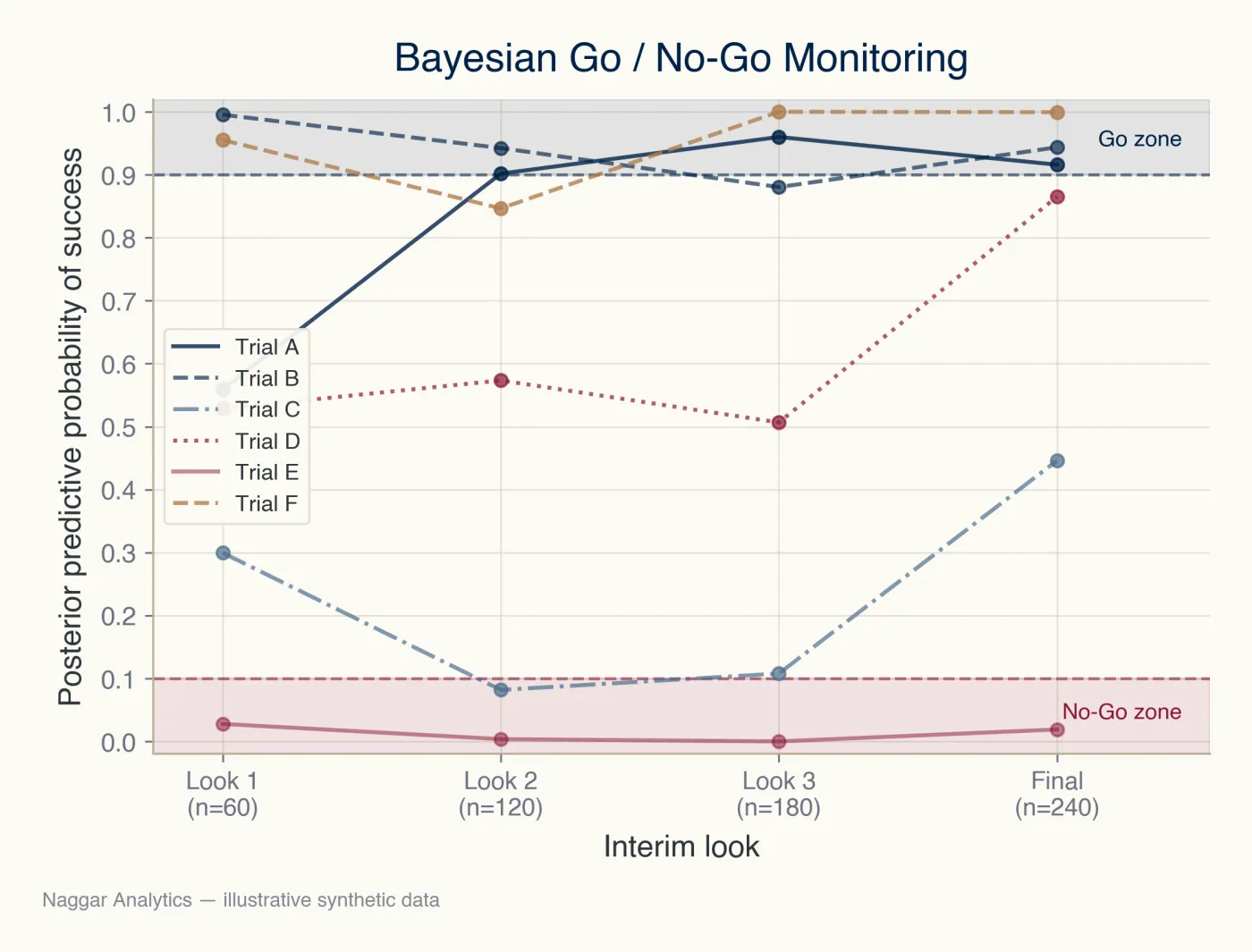
Implemented the interim and final analyses with Bayesian sample-size re-estimation in Stan/brms, using pre-registered stopping boundaries and a frozen, version-controlled analysis pipeline.
Mapped raw data to CDISC SDTM/ADaM, validated the datasets, and generated submission-ready tables, listings, and figures (TLFs) within a fully traceable, reproducible workflow.
Adaptive-design report with simulated operating characteristics and justified decision rules.
Validated CDISC SDTM/ADaM datasets plus a submission-ready TLF package.
Interim and final statistical reports aligned to the ICH E9(R1) estimands.
Operating characteristics validated by 10,000-replication simulation before any data were unblinded.
Analysis pipeline frozen and version-controlled; all decision rules pre-registered.
Datasets checked against CDISC SDTM/ADaM conformance rules.
Reporting aligned to ICH E9(R1) estimands for regulatory defensibility.
Adaptive designs are complicated, and we needed a team that truly understands interim analysis and stopping rules. They prepared the statistical plan for our anti-fibrotic trial and stayed with us through every interim look. The safety monitoring board was comfortable with the methods, and for us that was the most important thing.
Have a project to register?
Submit your project in the dashboard and we’ll map the analysis plan, deliverables, and timeline.