Real-World Evidence — Biologic Therapies in Rheumatoid Arthritis, GCC Registry
Multicenter retrospective cohort of 892 RA patients across 6 GCC hospitals. Applied propensity score matching and IPTW to compare biologic therapy classes on time-to-EULAR-response over 36 months, delivered for a Gulf-based CRO.
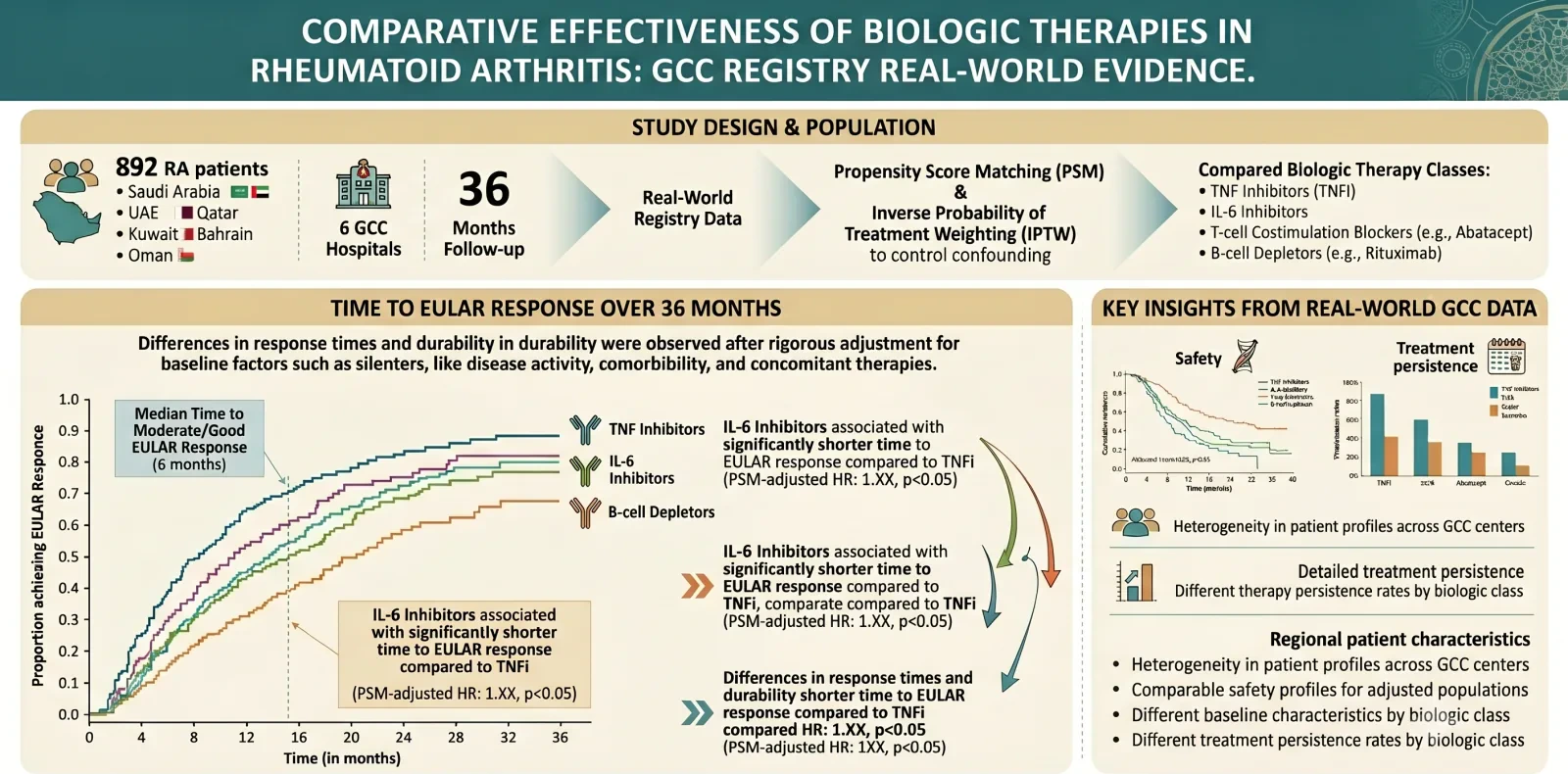
Project highlights
Quick summary
When you want to compare treatment effectiveness from real-world multi-site data and need rigorous confounding adjustment and a transparent assessment of result robustness.
We compared both treatments with rigorous confounding control and robustness checks.
- Target-trial protocol and STROBE/RECORD-aligned analysis plan.
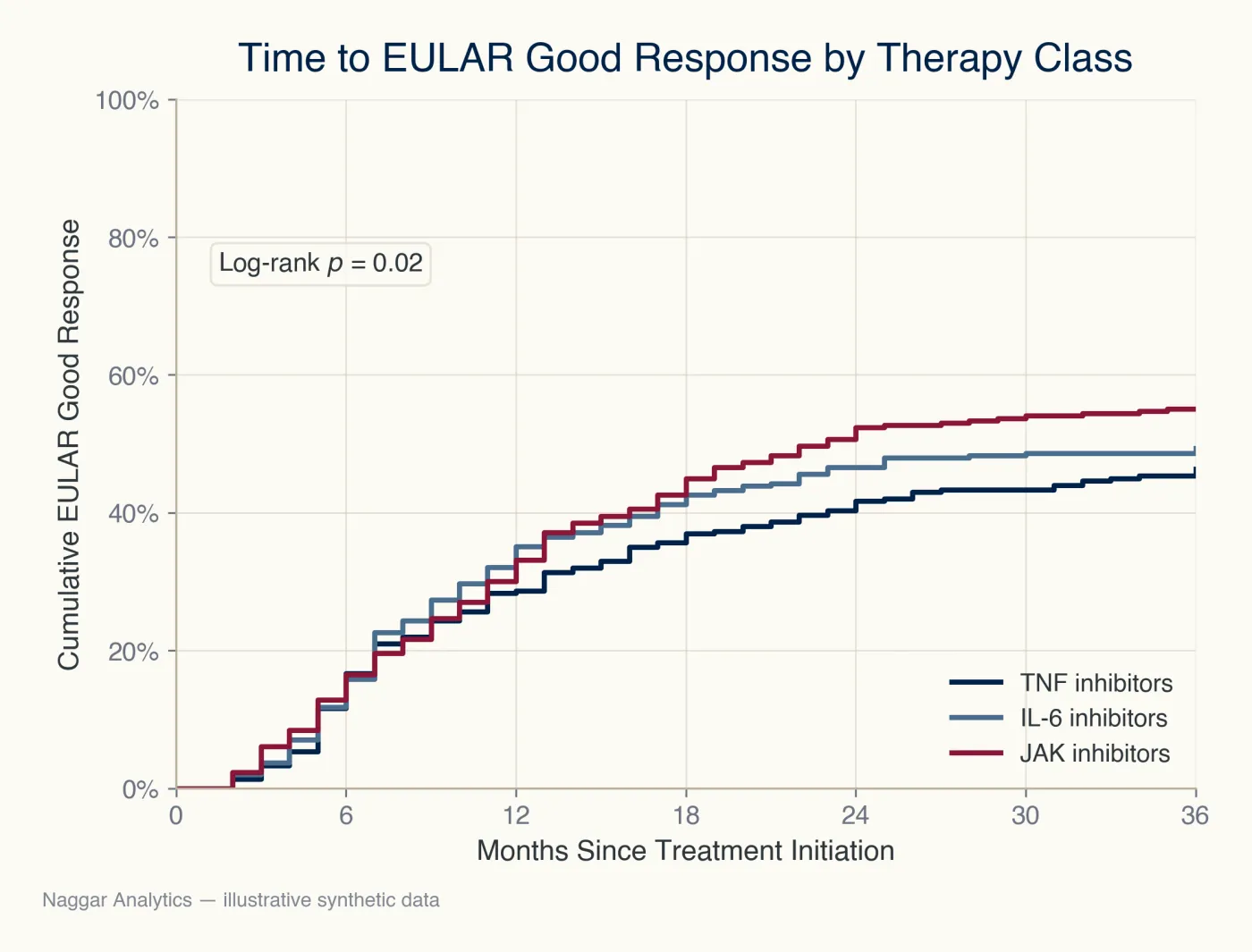
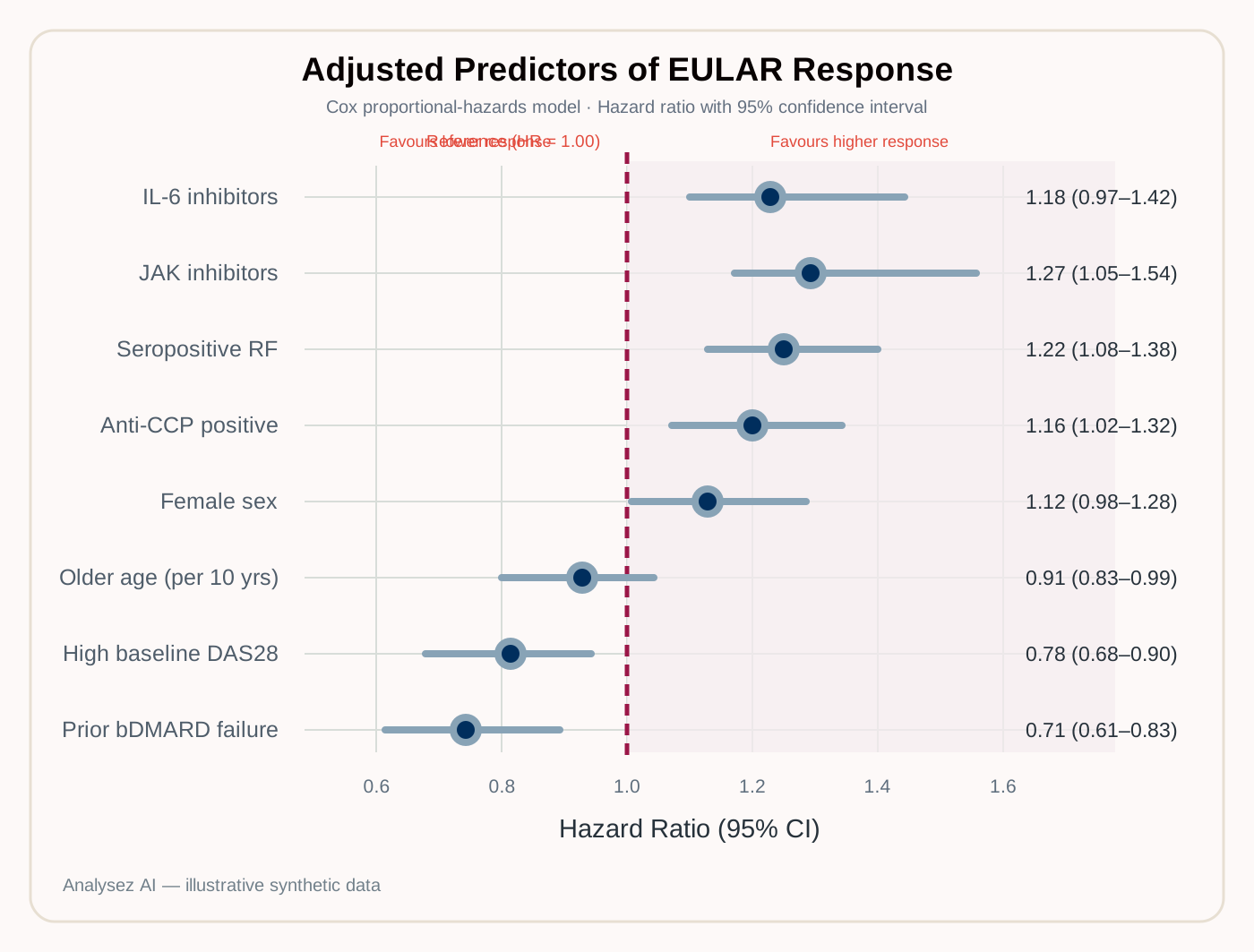
- Balanced comparative-effectiveness results with survival curves and hazard ratios.
Methods & Tools
Comparing biologic effectiveness from real-world GCC data required rigorous confounding control and transparent sensitivity to unmeasured bias across 6 sites and 36 months of follow-up.
Assembled a retrospective cohort of 892 patients across 6 sites with 36-month follow-up, applying a target-trial framework and STROBE/RECORD reporting.
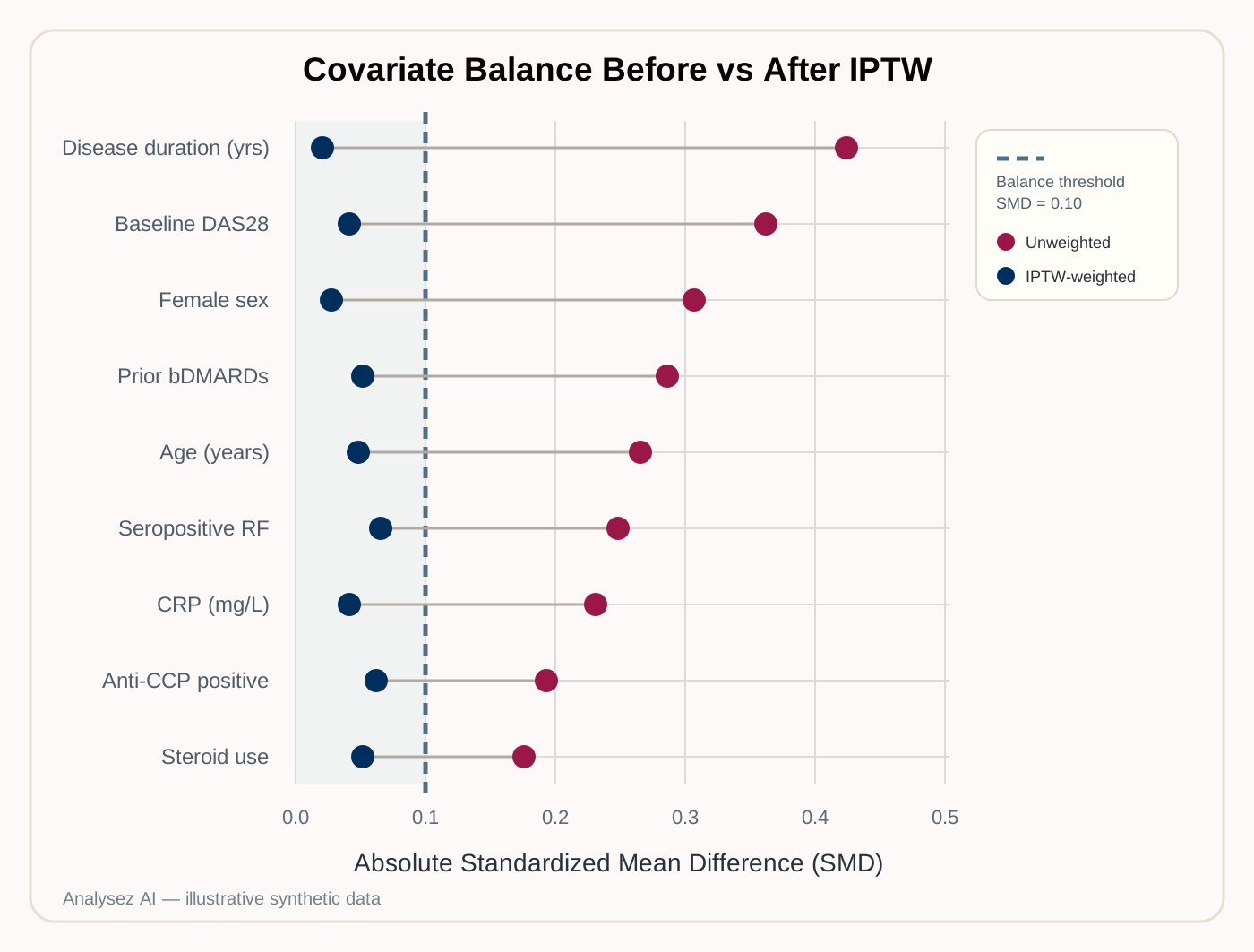
Controlled confounding with propensity-score matching and IPTW, confirming covariate balance with standardized mean differences.
Estimated comparative effectiveness with Cox proportional-hazards models and quantified robustness to unmeasured confounding with E-values.
Target-trial protocol and STROBE/RECORD-aligned analysis plan.
Balanced comparative-effectiveness results with survival curves and hazard ratios.
E-value and sensitivity analyses documenting robustness to bias.
Designed as a target-trial emulation to minimize design bias.
Covariate balance confirmed by standardized mean differences after weighting.
Reported to STROBE/RECORD observational-research standards.
Robustness to unmeasured confounding quantified with E-values.
We were building a real-world evidence registry for biologic therapies in rheumatoid arthritis across the GCC. The number of variables was very large, and the centres were not using the same definitions. They standardised everything and gave us an analysis we could defend in front of the regulators.
Have a project to register?
Submit your project in the dashboard and we’ll map the analysis plan, deliverables, and timeline.