Vitamin D Deficiency in Riyadh
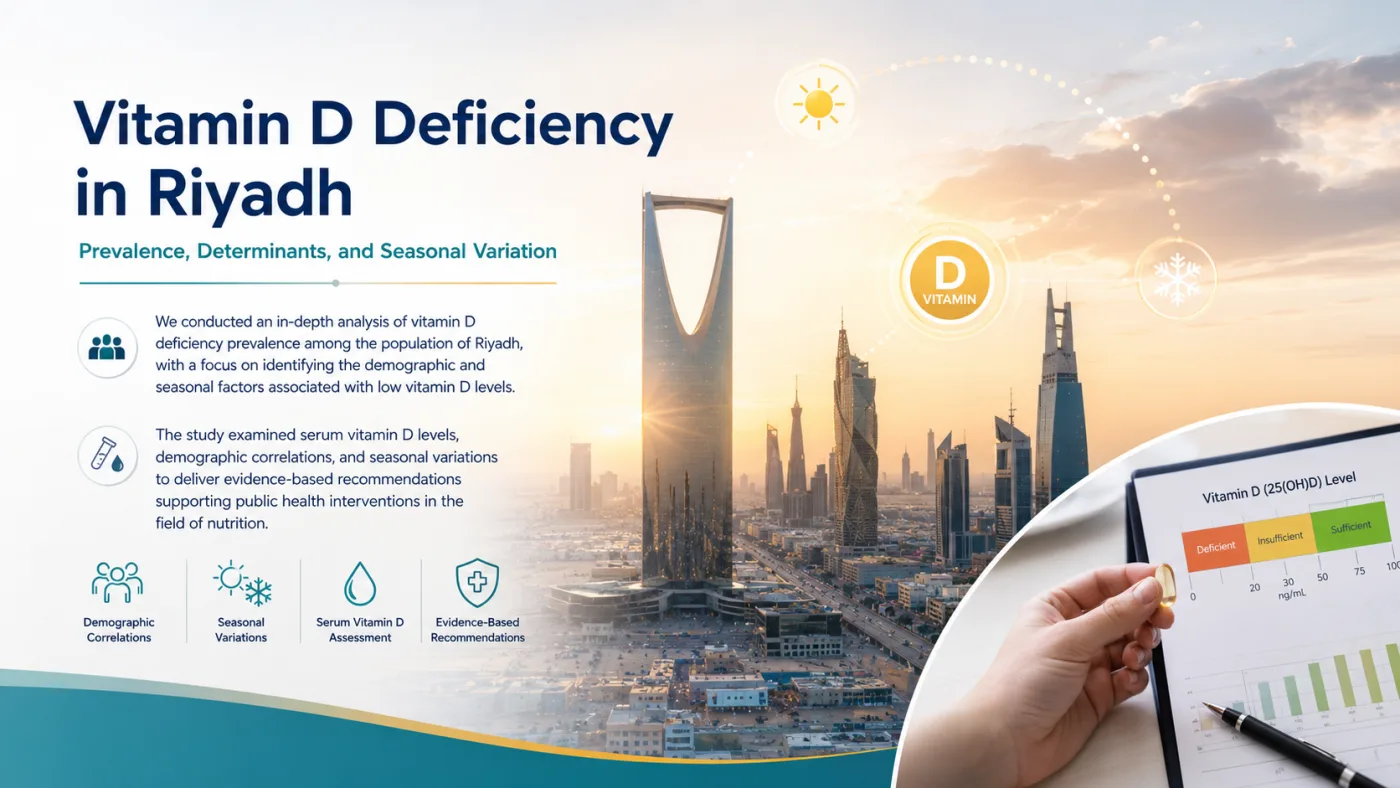
An in-depth analysis of vitamin D deficiency prevalence and risk factors among the population of Riyadh. The study investigated serum vitamin D levels, demographic correlations, and seasonal variations to inform public health interventions.
Project highlights
Quick summary
When you want to measure vitamin D status and its seasonal and demographic determinants across a large sample, with standardized estimates comparable between subgroups.
We analyzed a large serum sample and explained how season, age, and sex shape vitamin D levels.
- Analysis-ready, validated serum dataset with documented thresholds.
- Seasonal and risk-factor analysis report with standardized estimates.
Methods & Tools
Quantifying vitamin-D status and its seasonal and demographic determinants across a large population required multivariate modeling and standardized estimates comparable across subgroups.
Cleaned and validated 5,000+ serum records, checked distributional assumptions, and defined clinically meaningful deficiency thresholds.
Modeled seasonal and demographic effects on vitamin-D status across 4 seasons with MANOVA/ANCOVA, adjusting for key covariates.
Quantified independent risk factors with multivariable linear regression and reported direct-standardized prevalence by subgroup.
Analysis-ready, validated serum dataset with documented thresholds.
Seasonal and risk-factor analysis report with standardized estimates.
Publication-ready tables and figures with full methods documentation.
Distributional assumptions checked before multivariate modeling.
Deficiency thresholds pre-defined to clinical guidelines.
Estimates direct-standardized for fair subgroup comparison.
Reproducible analysis with fully documented methods and code.
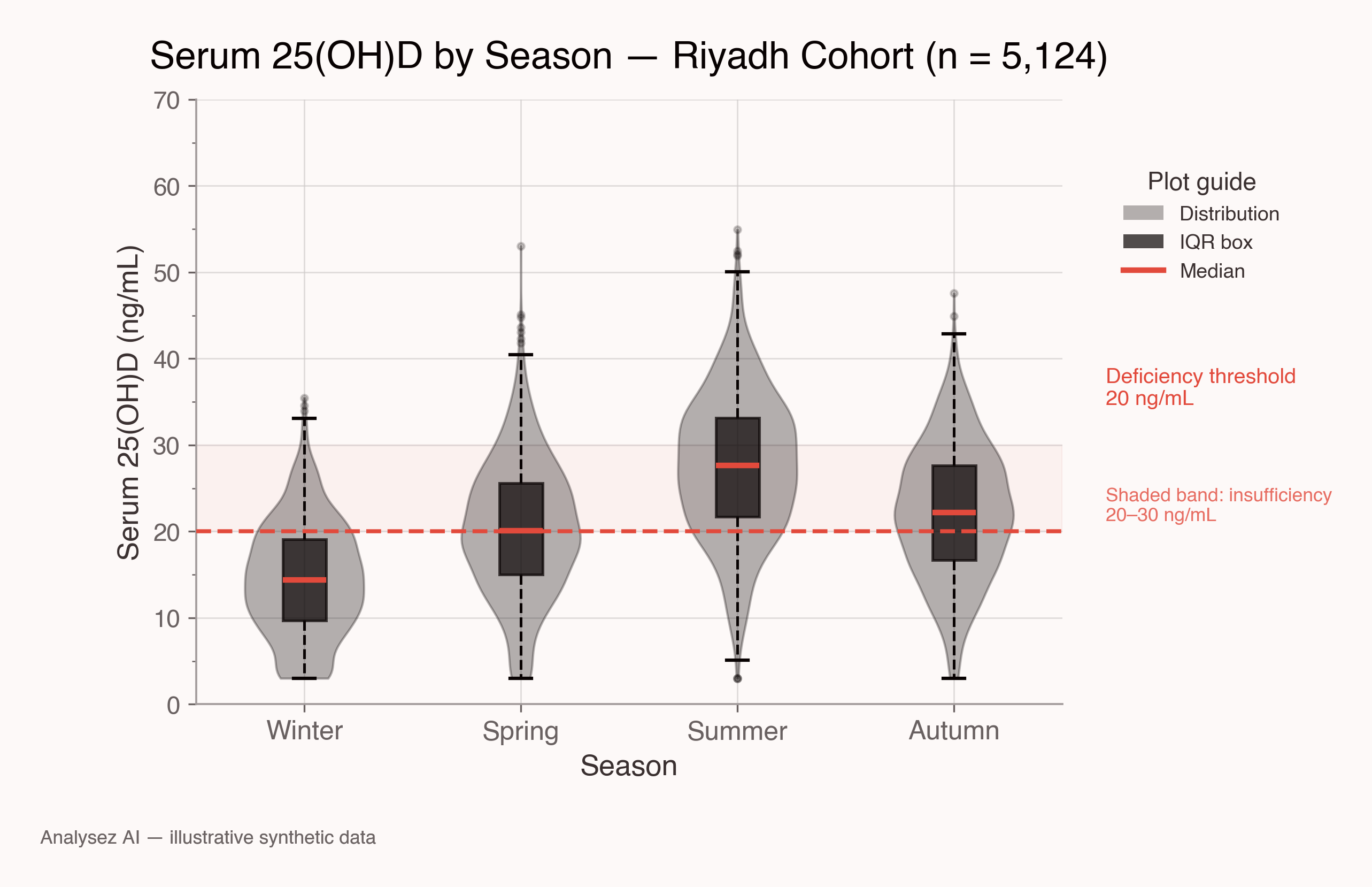
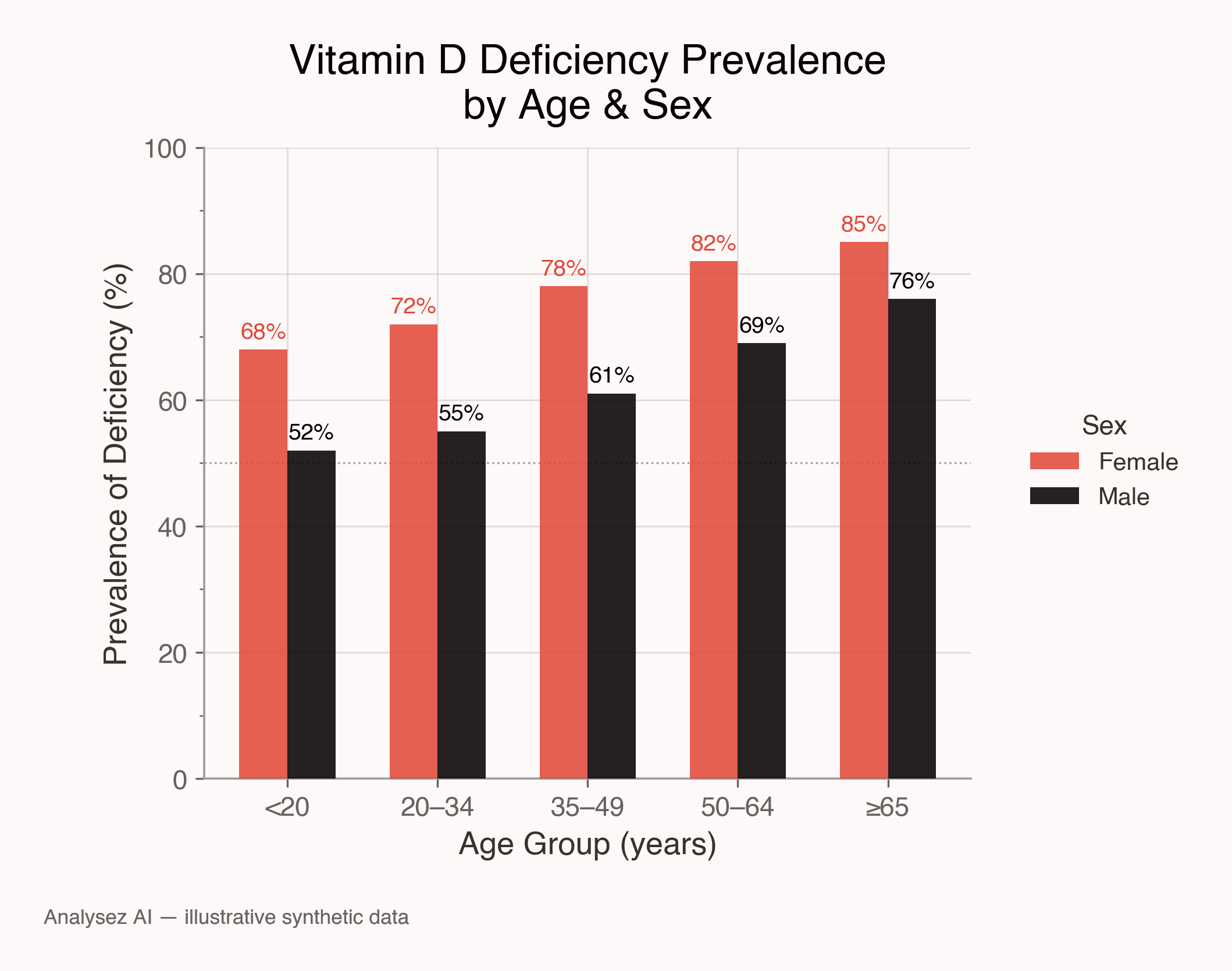

Our study looked at vitamin D levels across the year in Riyadh, with more than five thousand samples. The data came from different clinics and was not consistent, but they handled the cleaning and the seasonal analysis in SPSS without any complaint. The final tables were ready for the ministry report directly.
Have a project to register?
Submit your project in the dashboard and we’ll map the analysis plan, deliverables, and timeline.